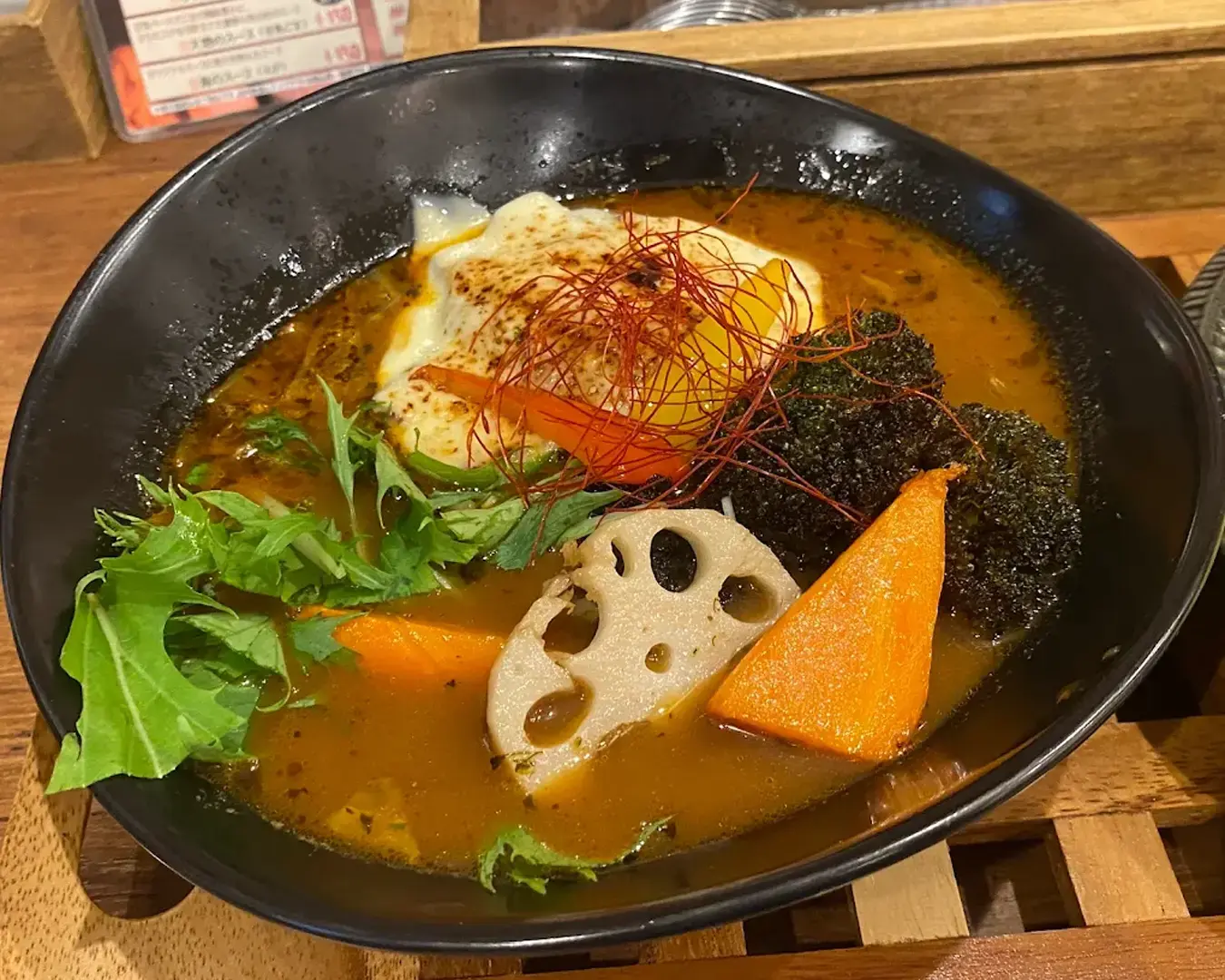
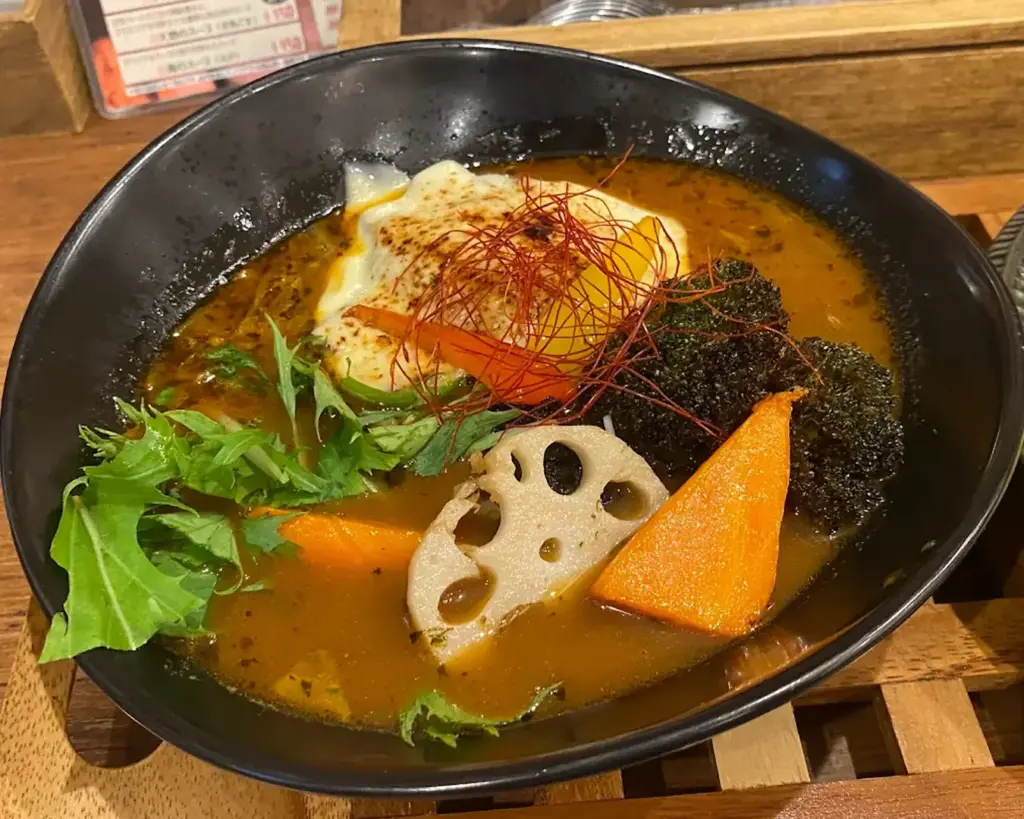
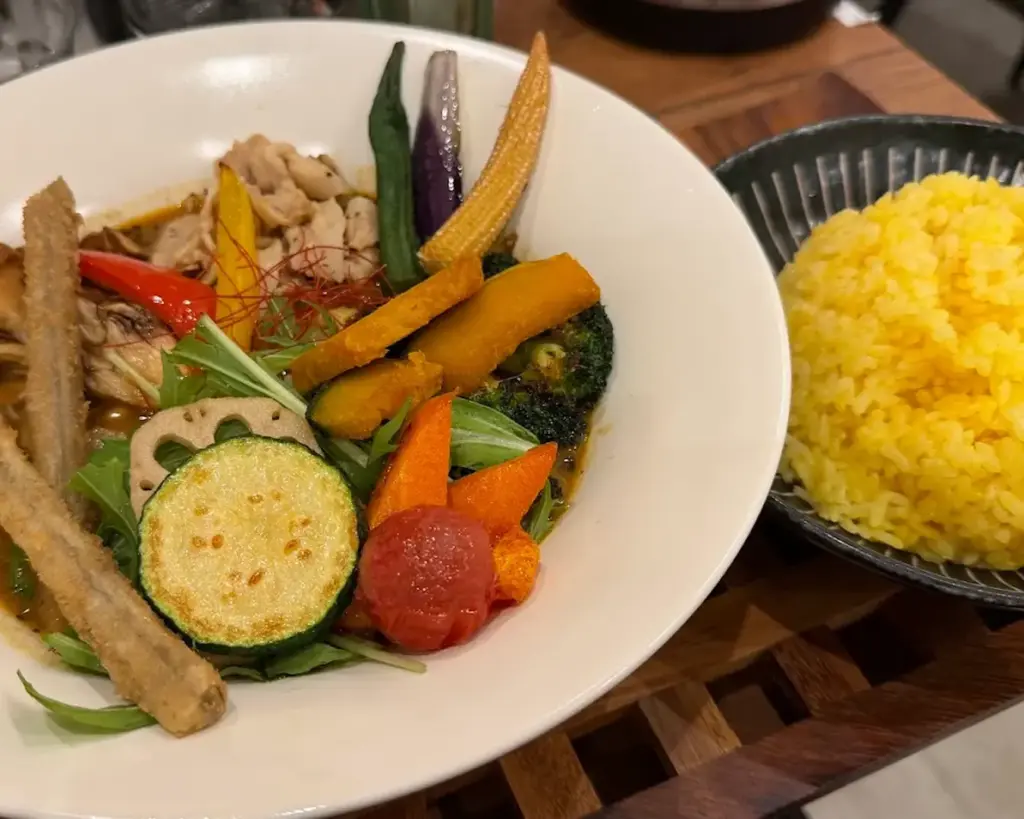
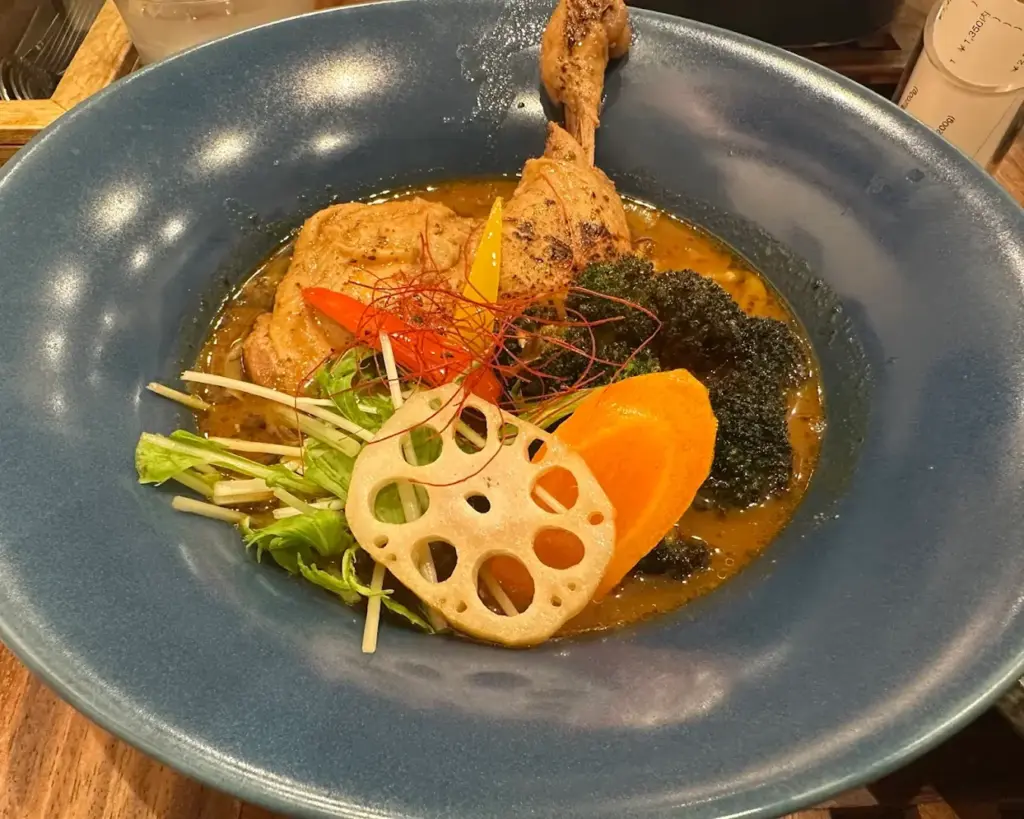
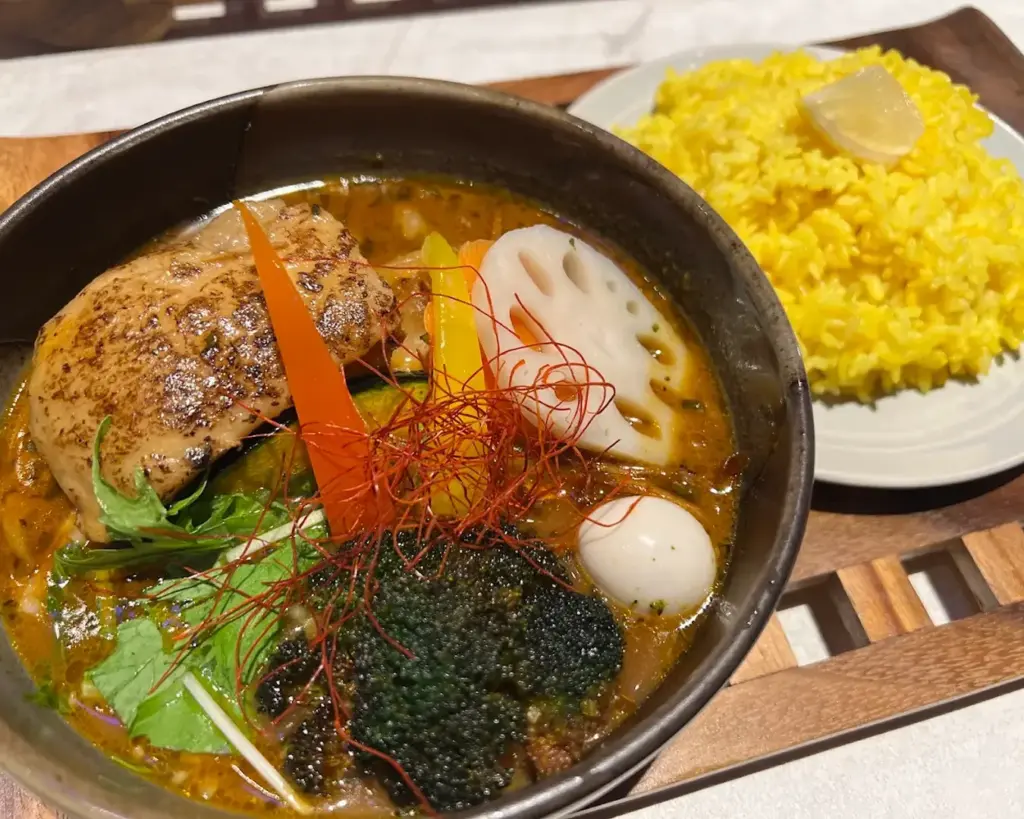
When I first ordered hokkaido soup curry in a small, wood-paneled shop on a rainy afternoon, I admit I was mildly confused. The steaming bowl arrived filled with an aromatic broth—a distinctly thin curry soup holding a massive, bone-in chicken leg and brightly colored, whole vegetables commonly found in this iconic local specialty, including bell peppers and kabocha squash. Beside it sat a separate plate of japanese rice, served separately in a small bowl. I stared at it, wondering if the kitchen had accidentally watered down my curry or if I was supposed to pour the liquid over the rice like a stew.
It turns out I was experiencing exactly what authentic soup curry is meant to be. Born in the bitter winters of Sapporo, the capital city of Japan’s North, Hokkaido, particularly in areas like Chuo Ward, this dish is not a diluted mistake. It is an intentional, highly crafted culinary experience and a signature dish from Japan’s North, emphasizing the region’s distinctiveness and unique soup culture. In Singapore, where we often default to thick ramen broths or heavy donburi for comfort, soup curry remains a somewhat misunderstood underdog. But once you understand the rhythm of how to eat soup curry, it quickly becomes one of the most rewarding meals you can find in the city.
Here is everything I have learned about navigating, ordering, and fully enjoying this vegetable soup curry and chicken and vegetables delight.
What This Is (and Why It’s Different from Typical Japanese Curry)
If you are expecting the thick, sweet, brown gravy of a traditional japanese curry usually poured over a pork katsu, you need to reset your expectations completely.
What surprised me most was how soup curry refuses to fit neatly into a single category. It is not Indian curry, though it relies heavily on a complex blend of spices like curry powder and garam masala. It is not Thai curry, as it rarely leans on coconut milk for its foundational texture. Instead, it is a brilliant hybrid: Indian spice influence married with japanese style broth-making techniques and hokkaido’s love for hearty fresh vegetables and root vegetables.
Common misconceptions I hear all the time:
“It’s just regular japanese curry with more water.” The soup base is actually carefully layered, usually starting with chicken bones and pork bones, vegetables, and a bespoke spice blend often prepared in a heavy bottomed pot to develop depth.
“It’s supposed to be thick and creamy.” The watery texture is entirely intentional. It is designed to be light but deeply aromatic, with a flavor profile that highlights the spices and fresh ingredients.
“Spicier means more authentic.” The spice level is fully customizable. A good broth tastes incredible even at level zero.
How It Works: The Step-by-Step Experience to Eat Soup Curry
Walking into soup curry restaurants can feel a bit like taking a multiple-choice test. The menus are highly customizable, which is wonderful once you know what you are doing, but slightly daunting the first time. Here is the exact flow of how you order.
Step 1: Choose your main protein
The classic, undisputed king of hokkaido soup curry is the bone in chicken leg. It is usually slow-cooked until fork tender, then sometimes flash fried using the japanese su age technique for a crispy skin. You will also find pork belly, seafood assortments, and hearty vegetarian options in this vegetable curry.
Step 2: Select your soup base
Many specialty shops, including famous names like soup curry garaku and magic spice, offer a choice. The classic is a clear, savory chicken broth made from chicken bones and flavored with soy sauce and tomato paste. Some places offer a tomato-based broth (which adds a lovely acidity) or a richer coconut variation.
Step 3: Pick your spice level
This is where most spice lovers panic.
Levels 0–2: Very mild. Safe for absolute beginners.
Levels 3–5: Balanced heat. This is usually the sweet spot where the spices wake up your palate without masking the broth.
Levels 6+: Challenge territory. Proceed with caution.
Step 4: Choose your rice portion
A standard rice portion is usually 200g to 300g of steamed japanese rice. If you are not overly hungry, you can often request a smaller portion. Many rice developers emphasize serving the rice separately in a small bowl to preserve texture and allow the diner to dip the rice into the soup curry.
Step 5: Add your toppings
This is the fun part. You can add boiled eggs, melted cheese to your rice, or extra vegetables like deep fried vegetables such as lotus root, broccoli, or other vegetables prepared using the su age technique. These vegetables are lightly flash-fried without batter, often rested on paper towels or a wire rack to drain excess oil and preserve their crispness.
Insider Insight: The chunky vegetables in a good soup curry are prepared using the japanese su age technique (light deep-frying without batter). This flash frying cooks them quickly while preserving their vibrant color, natural sweetness, and structural crunch.
How to Choose and Navigate Authentic Soup Curry Properly
After visiting a few soup curry restaurants, I noticed that not all soup curry is created equal. When deciding where to eat, look for a few distinct quality indicators.
A proper soup curry broth should be clear and aromatic, not oily or muddy. You should be able to taste distinct layers of flavor—the earthy spices, the savory meat stock, the slight sweetness of the vegetables—not just a flat wall of chili heat. The ingredients should look deliberate. You want whole cuts of protein, like a full chicken leg, rather than chopped, unrecognizable bits of meat.
Red flags to avoid:
If the broth arrives looking thick and gravy-like—more like curry roux—it is not authentic soup curry. Similarly, if there is an overly thick slick of oil resting on the surface, or if the vegetables are soggy and gray, the kitchen has likely skipped the crucial su age frying step or cooked the vegetables together in the broth rather than cooked separately.
Cost, Timing, and Practical Planning in Japan’s North Capital City
In the Singapore context, expect to spend around $15 to $25 per person. A basic bowl usually starts between SGD $12 and $16. If you visit mid-range specialty shops or order premium sets with imported hokkaido soup ingredients, drinks, and side dishes, the bill will sit closer to SGD $20 to $28.
Pro Tip: Compared to Japan, Singapore prices are roughly 20% to 40% higher due to import costs and the niche demand. It is a premium comfort food here.
This is not a fast-food experience. Expect the meal to take about 45 minutes to an hour, factoring in the cooking time for slow-simmered broths and freshly prepared toppings. The peak time in CBD locations runs fiercely from 12:00 PM to 1:30 PM, and popular items like the classic chicken leg frequently sell out by 1:00 PM.
If you want the best possible atmosphere, go during a heavy rainstorm. There is nothing quite like sitting in a dry, air-conditioned room, sipping a fiercely spiced, aromatic broth while the rain hammers the pavement outside. Wear light, comfortable clothing—splashing a bit of turmeric-stained broth on a white shirt is practically a rite of passage.
FAQ: Real Questions People Ask About Hokkaido Soup Curry
Why is it so watery?
It is fundamentally a broth-based soup, not a roux-based gravy like regular japanese curry. The texture allows you to drink it and taste the delicate infusion of spices without it feeling heavy or cloying. This also helps aid digestion, making it a warming dish especially appreciated in colder climates.
How spicy is it, really?
It is exactly as spicy as you want it to be. Because you choose your own spice level, it can range from a completely mild, savory chicken soup to an intense, sweat-inducing challenge.
Do I drink it or eat it with rice?
You do both. The traditional method is to scoop a small amount of rice onto your spoon, submerge it briefly into the soup, and eat. Sip the broth directly from the spoon between bites of vegetables and meat.
Is it Indian, Thai, or Japanese?
It is distinctly japanese curry but wears its global influences proudly. It uses Indian-inspired dry spices like garam masala and curry powder but applies japanese style broth-building techniques and presentation.
Why does it cost more than regular japanese curry?
Regular japanese curry relies on a thick curry roux that is easily mass-produced and stretched. Soup curry requires crafting a nuanced bone broth from scratch in a large pot or heavy bottomed pot, individually flash frying fresh vegetables, and slow-cooking whole cuts of meat. You are paying for the labor and the technique.
A Slower Kind of Comfort in Japan’s North Capital
Finding a good bowl of sapporo soup curry in Singapore feels like unlocking a secret level of japanese cuisine. It asks a little more of you than a standard fast-casual meal. You have to make decisions about broths and spice levels, and you have to navigate the mechanics of dipping and sipping.
But that slight effort is exactly what makes it so satisfying. It represents comfort, adaptation, and culinary creativity. If you find yourself caught in a sudden afternoon downpour, or if you simply want a dish that warms you from the inside out without leaving you feeling sluggish, seek out a soup curry specialist. Order the chicken leg, stick to a level 3 spice, and take your time.
For those interested in exploring further, consider trying other iconic Hokkaido soups like ishikari nabe, a miso-based hotpot with salmon and vegetables, to deepen your appreciation of the region’s rich soup culture.
Enjoy your culinary journey!
If you’re ready to put this knowledge into practice, explore our guide to the Mild to Insane: Best Soup Curry Spots for Every Spice Level in Singapore and find the perfect bowl for your spice tolerance.