
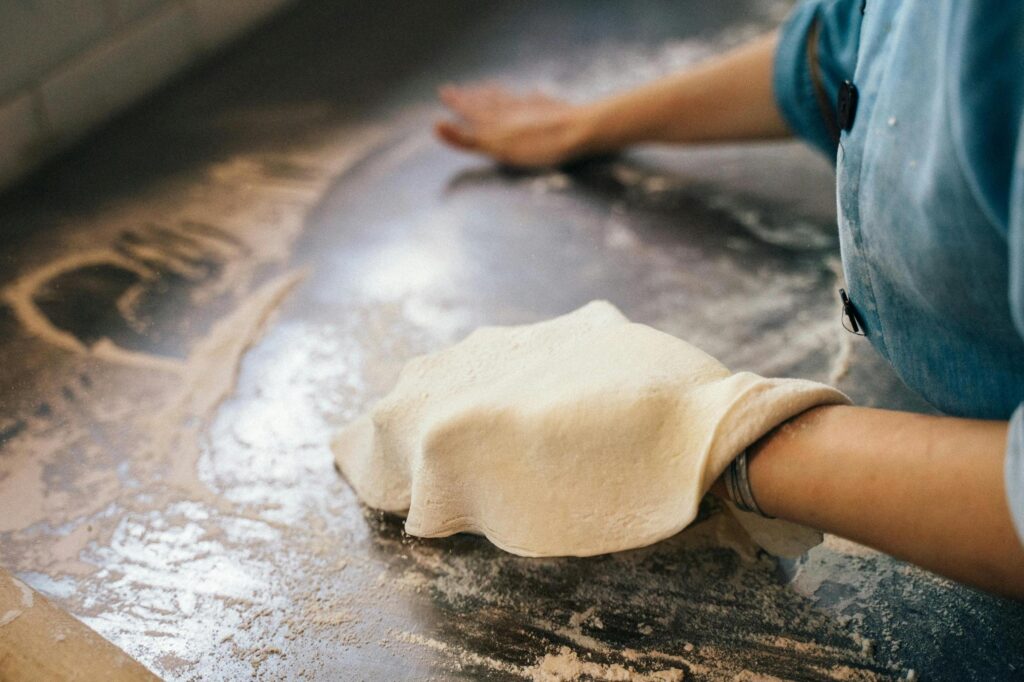
Making pizza dough at home can feel like a daring kitchen adventure. Many have faced rock-hard crusts or sticky dough disasters, only to retreat to store-bought bases or late-night delivery. But nothing compares to the thrill of pulling a perfect, bubbling, crisp-chewy pizza from your own oven. With the right pizza dough recipe, even a simple margherita can feel like magic—and experimenting with new flavors becomes part of the fun.
Here’s the best part: you don’t need Italian “00” flour, a wood-fired oven, or fancy gadgets to make amazing pizza. With all-purpose flour, olive oil, and a few pantry staples, you can whip up the best homemade pizza dough and never glance at the frozen aisle again.
Think of this guide as your pizza-making sidekick—ready to walk you through the science of dough, the best supermarket ingredients, and an easy recipe that works every time. By the end, you’ll be stretching, topping, and baking golden brown pizza crusts that rival your favorite pizzeria.
Introduction to Homemade Pizza
There’s something magical about making homemade pizza in your own kitchen. With just a simple pizza dough recipe and a handful of supermarket staples, you can whip up pizzas that are fresher, tastier, and more fun than anything in the freezer aisle. Whether you’re crafting a classic margherita or trying your own creations, it all starts with a great pizza dough.
Don’t worry if you’re new to this—making pizza at home is easier than you think. All you need is a reliable dough recipe, a baking sheet, and your favorite toppings. The best pizza dough is the one that fits your style, whether you love a chewy crust or a crisp base. Once you master the basics, you’ll be making pizzas for every occasion—from weeknight dinners to weekend gatherings. Get ready to roll up your sleeves and discover how rewarding homemade pizza can be!
The Science Behind Homemade Pizza Dough
A truly great pizza starts with a strong foundation: the dough. Think of it as a little science experiment powered by four simple ingredients.
Flour: The backbone. When hydrated, the proteins form gluten, trapping air bubbles for that chewy yet airy pizza crust.
Water (warm water is best): Activates gluten and yeast. The hydration level determines if you’ll get a soft thicker crust or light thin crust.
Yeast (instant yeast or active dry yeast): Feeds on sugars, releasing carbon dioxide to make the dough rise. It also gives that irresistible tangy flavor.
Salt: Not just for taste. Salt regulates yeast growth and strengthens the gluten network, giving you a stable dough ball that’s easy to stretch.
Every knead, fold, and dough rest develops this gluten network, creating the stretchy structure needed for the perfect pizza.
Choosing Ingredients for Your Homemade Pizza Dough Recipe
You don’t need imported Italian goods—everything is at your local supermarket.
The Best Flour for a Perfect Pizza Crust
All Purpose Flour: Affordable, reliable, and forgiving. Brands like Gold Medal or King Arthur give you a crust with a tender yet chewy bite.
Bread Flour: Higher protein means a chewier, crispier crust—great if you want that New York pizzeria style.
💡 My tip: Start with all purpose flour, then try bread flour once you’re ready for a crispier crust.
Yeast, Oil, and Flavor Boosters
Instant Yeast: Easiest for beginners—just mix it straight in with the dry ingredients.
Active Dry Yeast: Works too, but dissolve it in warm water first.
Olive Oil / Extra Virgin Olive Oil: A drizzle adds flavor, helps tenderness, and gives that golden sheen.
Salt: Table salt or fine sea salt does the job.
Sugar: Optional, but helps with browning and gives yeast a jumpstart.
Foolproof Easy Pizza Dough Recipe
This is the dough recipe I wish I had when I started. It’s simple, forgiving, and results in enough dough for two 12-inch pizzas.
Yields: 2 pizzas
Prep time: 15 minutes
Rise time: About 2 hours (or up to 3 days in the fridge)
Ingredients
3 cups (360g) all purpose flour or bread flour
1 ½ tsp instant yeast (or active dry yeast, proofed in water)
1 ½ tsp fine sea salt
1 tbsp sugar (optional)
1 ⅓ cups (320ml) warm water (105-110°F)
2 tbsp extra virgin olive oil
Instructions
Mix in a Large Bowl: Combine flour, yeast, salt, and sugar. Use a wooden spoon to stir in water and oil until you get a shaggy, slightly sticky dough.
First Rise (Let the Dough Rise): Cover with plastic wrap or a damp tea towel. Leave at room temperature until doubled (about 2 hours), or refrigerate up to 3 days for a slow dough rise and deeper flavor.
Divide the Dough: On a lightly floured surface (or lightly floured work surface), gently turn out the dough. Divide the dough into two halves and shape each into a smooth dough ball with lightly floured hands.
Second Rise / Dough Rest: Place the balls in a glass bowl or oiled container, cover, and let them dough rest 30–60 minutes. This makes stretching easier.
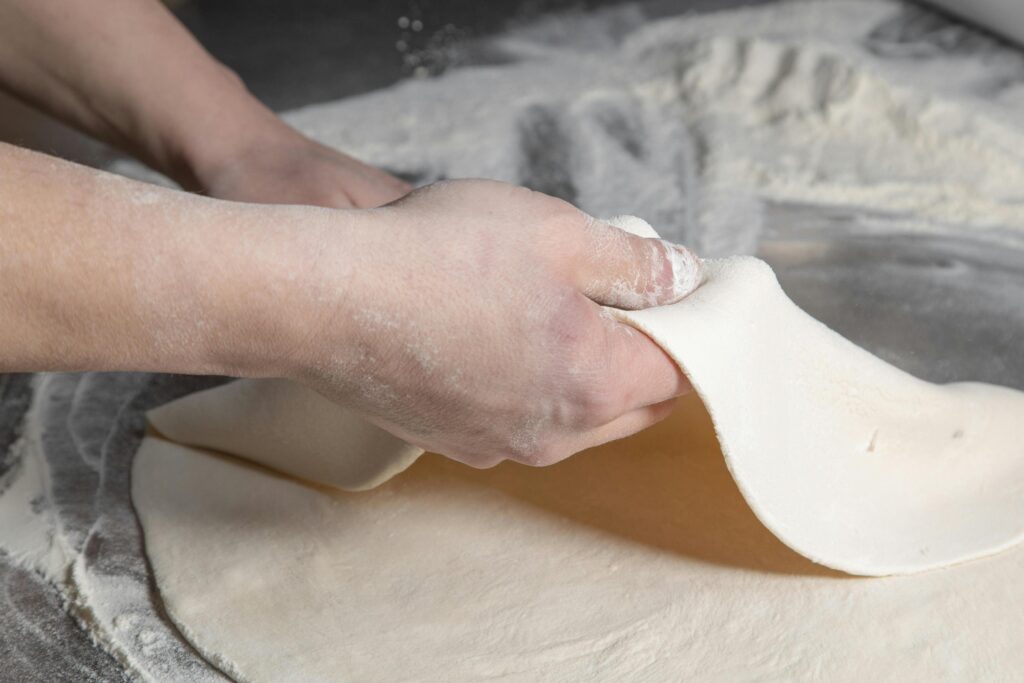
Shape the Crust: Use your fingertips to press and stretch the dough. Avoid the rolling pin—you want those air bubbles! Stretch into a circle and transfer to a pizza pan, baking sheet, or hot pizza stone lined with parchment paper or dusted with semolina flour.
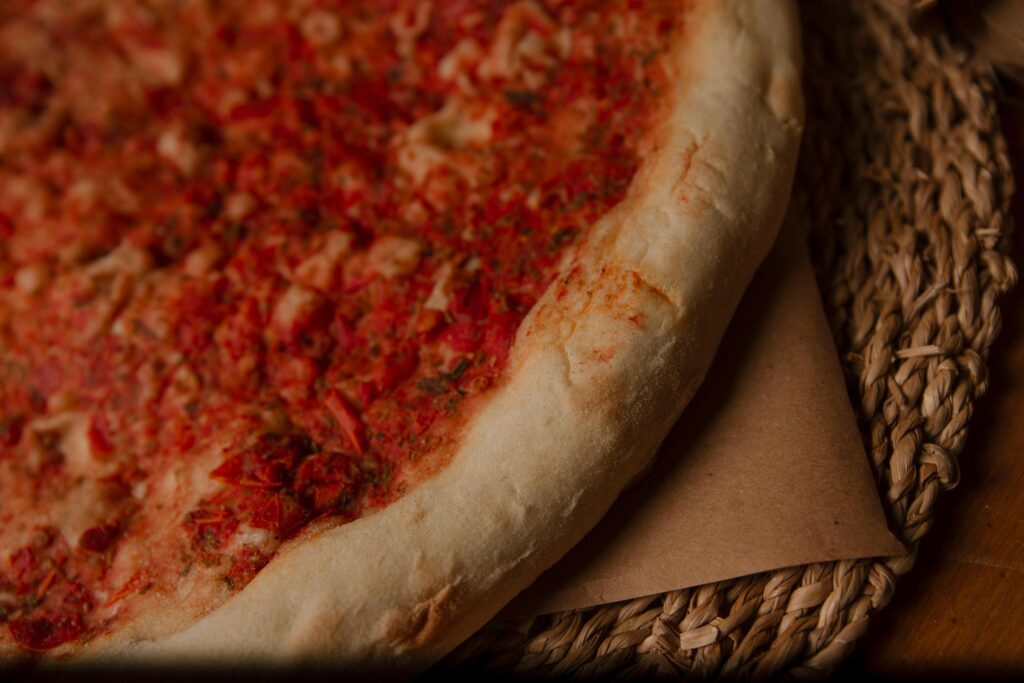
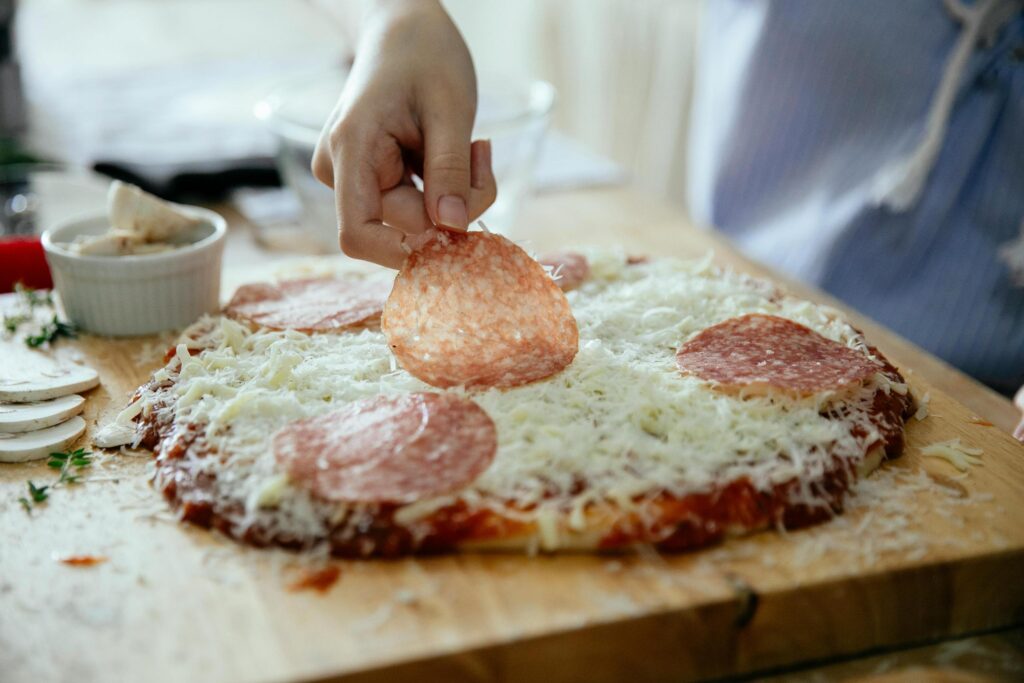
Top and Bake the Pizza: Add pizza sauce, mozzarella, and your desired toppings. For best results, brush a thin layer of olive oil or sprinkle a thin layer of cheese on the dough before adding sauce and toppings—this helps with topping adhesion and improves the crust texture. Preheat oven to the highest setting (500–550°F) for at least 45 minutes. Use a pizza peel to slide it onto a baking stone or just bake on a baking sheet. Bake the pizza until the crust is puffed and golden brown—about 7–10 minutes.
Common Mistakes with Pizza Dough (and How to Fix Them)
Using cold water: Yeast needs warmth—stick to warm water.
Being impatient: Good dough takes time. Don’t rush the dough rise.
Adding too much flour: Your dough should be slightly tacky. Resist dumping in more flour.
Overusing a rolling pin: This deflates your dough. Use your hands for a light, airy thin crust or thicker crust.
Pro Tips for the Best Pizza Dough Recipe at Home
Hot Oven = Great Pizza: Always bake in a blazing-hot oven. Preheating gives you that instant oven spring.
Use a Pizza Stone or Baking Stone: Retains heat for a crisp, charred bottom.
Cold Fermentation: Let your dough rest in the fridge for 24–72 hours—it’s the secret behind artisan flavor.
Freeze Half: You can freeze half of your dough ball for another night. No need to settle for frozen pizza dough when you’ve got homemade ready to go!
Fun Pizza Recipes & Toppings to Try
Once you’ve nailed the homemade pizza dough, experiment with flavors.
Classic Pizza Margherita: Tomato sauce, mozzarella, and fresh basil. Nothing beats it.
Spicy-Sweet Combo:Soppressata with a drizzle of hot honey.
Prosciutto & Arugula: Bake with cheese, then top with arugula and prosciutto.
Mini Pizzas: Great for parties—just divide dough into smaller balls and let everyone add their own toppings.
Sprinkle with garlic powder, drizzle a little olive oil, and go wild with pizza toppings.
Quick Fix: When You Don’t Have Time to Make Pizza Dough
Running short on time? Grab frozen pizza dough or refrigerated dough balls from the supermarket. They beat pre-baked crusts and are a lifesaver for weeknight cravings.
Making Ahead and Freezing
One of the best things about homemade pizza dough is how easy it is to make ahead and freeze for later. After preparing your dough, simply divide it into individual dough balls and place them in freezer-safe bags or containers. Your dough will keep in the freezer for up to three months, making it a convenient option for busy nights.
When you’re ready to make pizza, just thaw the dough in the refrigerator or at room temperature, then let it rise before shaping and baking. You can even assemble frozen pizzas by adding your toppings to the dough and freezing them before baking. This way, you’ll always have a quick, delicious pizza ready to go—no need to rely on store-bought versions again!
Bake the Pizza, Share the Joy
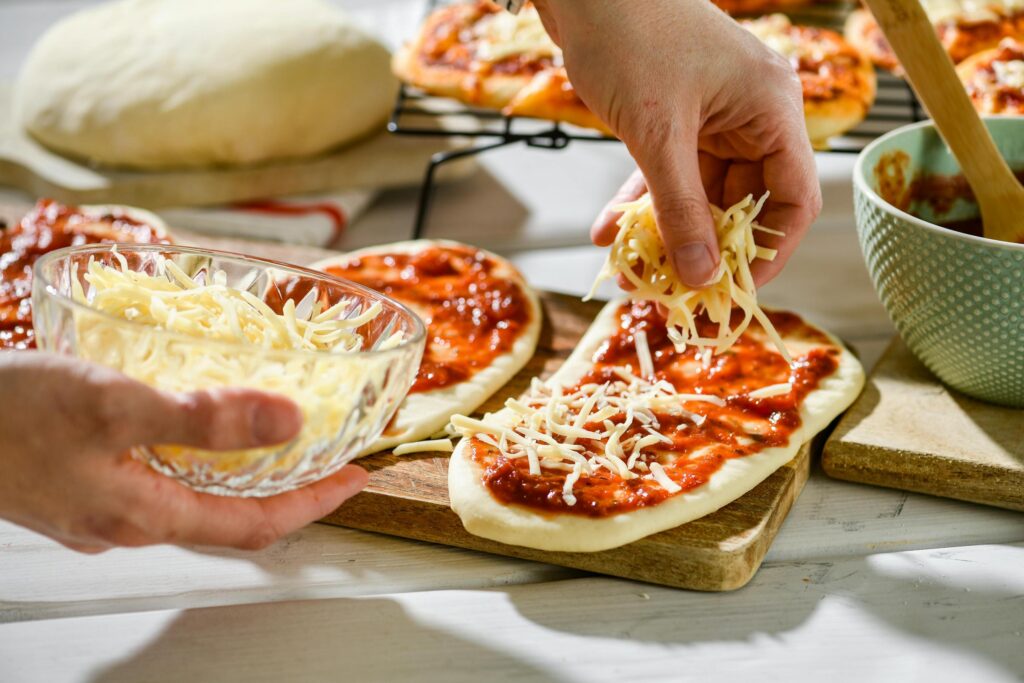
The beauty of this homemade pizza dough recipe is that it makes pizza night fun, hands-on, and endlessly customizable. You don’t need fancy tools—just a large mixing bowl, dough hook (optional if you use a stand mixer), and enthusiasm.
Stretch it, top it, and bake the pizza until it’s bubbling and golden brown. Invite friends, put out a spread of own toppings, and discover the joy of making pizza at home.
Because once you’ve made your perfect pizza crust, you’ll never go back to delivery.
Resources for Further Learning
If you’re eager to take your homemade pizza skills to the next level, there’s a world of resources waiting for you. Dive into cookbooks like “The Pizza Bible” by Tony Gemignani or “Pizza Night” by Alexandra for expert dough tips and creative recipes. Online communities such as Reddit’s r/pizza are full of passionate home cooks sharing their favorite margherita, white pizza, and more.
Websites like King Arthur Flour and Serious Eats offer step-by-step guides, dough recipes, and topping inspiration to help you perfect your homemade pizzas, along with tips from WanderBitesBlog will help you bake pizzas that rival your favorite pizzeria. With a little practice and curiosity, you’ll soon be creating pizzas that impress everyone at your table! Whether you’re aiming to master the art of pizza dough or explore new topping ideas, these resources will help you bake pizzas that rival your favorite pizzeria. With a little practice and curiosity, you’ll soon be creating pizzas that impress everyone at your table!