
The forest floor was damp, smelling of pine needles and rich, dark earth. I moved slowly, my eyes scanning the ground, trying to tune into what a friend once called “mushroom vision.” For hours, there was nothing. Then, I saw it—a flash of bright yellow hidden beneath a fern. I knelt down and brushed away the leaves to reveal a perfect, fluted chanterelle mushroom. The feeling was electric; a thrill of discovery that connected me to the ancient practice of wild mushroom foraging. This wasn’t just finding food; it was uncovering a secret treasure.
Why the Pacific Northwest is a Mushroom Hunting and Foraging Dream
Oregon’s diverse ecosystems provide the ideal habitat for a wide range of fungi species. The state’s unique geography gives foragers distinct environments to explore and ample opportunities to forage for wild mushrooms across various landscapes. The coastal forests, drenched in fog and good rain, are famous for their bountiful chanterelle harvests. Further inland, the mixed-conifer forests of the Cascades, with trees like Douglas fir, western hemlock, and Sitka spruce, harbor everything from sought-after king boletes (porcini) to elusive morels that pop up after wildfires.
This combination of abundant rainfall, mild temperatures, and diverse tree species creates a complex, symbiotic relationship that allows mushrooms to grow abundantly. The state’s commitment to public lands—such as national forests like Siuslaw National Forest and Oregon state parks—means there are millions of acres generally allowed for personal use mushroom foraging, making Oregon one of the premier destinations for mushroom hunting in the Pacific Northwest.
Edible Mushrooms and Common Mushrooms Found in Oregon’s Forests
While there are thousands of mushroom species in Oregon, the most common mushrooms—those frequently encountered and highly regarded by foragers—are at the top of every forager’s list. Focusing on these well-known edible mushrooms is a great way for beginners to start.
Chanterelles (Cantharellus species)
Often called “gold of the forest,” chanterelles are perhaps Oregon’s most famous wild mushrooms.
-
Identification: They are typically bright yellow to pale yellow, with a funnel shape. The most important feature is their “false gills“—they have wavy ridges or wrinkles that run down the thick stem, not the sharp, blade-like gills of many other mushrooms. They also have a faint, fruity aroma, often compared to apricots.
-
Season: Fall mushroom season, typically from September through November, after the first heavy rains.
Morels (Morchella species)
The ultimate springtime prize. Morels are treasured for their unique, honeycomb-like appearance and nutty, earthy flavor.
-
Identification: They have a distinct, deeply pitted cap that is fully attached to the stem. Crucially, true morels are completely hollow when sliced open lengthwise. This helps distinguish them from toxic “false morels,” which are poisonous mushrooms.
-
Season: Spring, from March to June. They often appear in disturbed ground, such as burn sites from the previous year’s wildfires, making them a unique focus of mushroom foraging Oregon enthusiasts.
King Boletes (Porcini)
A classic gourmet mushroom beloved in Italian cuisine and highly prized among mushroom experts. The king bolete, also known as porcini, cep, or penny bun, is a highly sought-after edible mushroom famous for its large size, thick stems, meaty caps, and rich, earthy flavor, making it extremely popular in culinary uses.
-
Identification: King boletes have a thick, bulbous stem and a smooth, light brown to dark brown cap. Instead of gills, they have a spongy layer of pores on the underside of the cap, which is yellowish in young specimens and darkens with age.
-
Season: Fall, often appearing around the same time as chanterelles.
Honey Mushrooms and Oyster Mushrooms
-
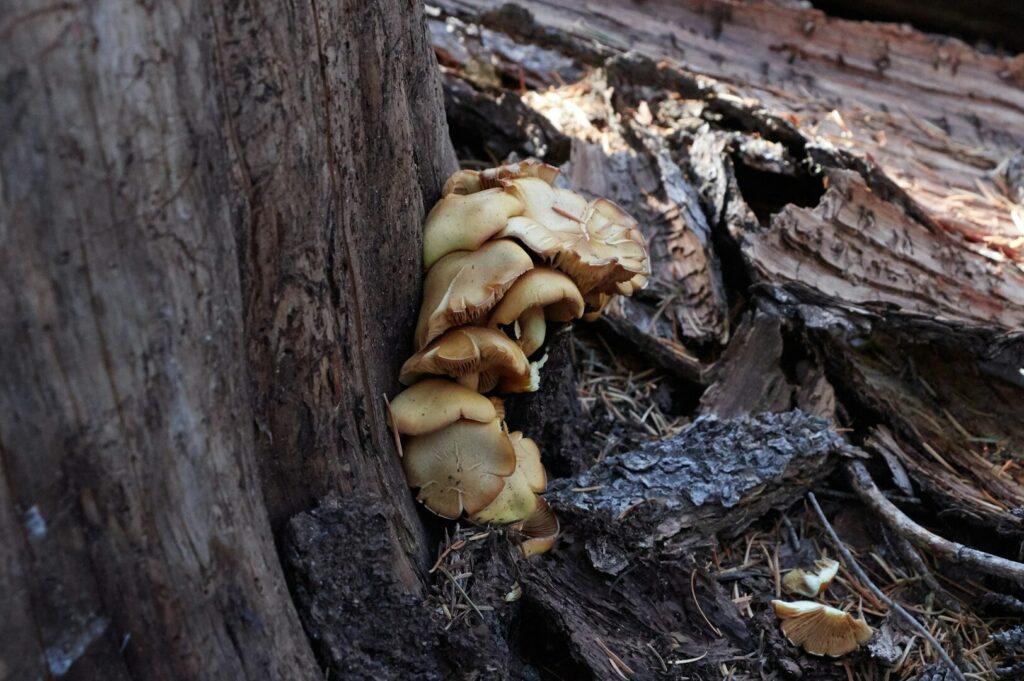
Honey Mushrooms: These parasitic fungus species grow on living or dead trees and are common mushrooms found in Oregon. They have a honey-colored cap and grow in clusters on the forest floor.
-
Oyster Mushrooms: Often found growing in shelf-like clusters on dead or dying hardwood trees, oyster mushrooms are a popular edible species prized for their delicate flavor and texture.
Lobster Mushrooms and Matsutake Mushrooms
-
Lobster Mushrooms: These bright orange mushrooms are actually a parasitic fungus that grows on other mushrooms, creating a firm, dense texture and seafood-like flavor.
-
Matsutake Mushrooms (pine mushroom): Highly prized in Japanese cuisine, matsutake mushrooms have a spicy-cinnamon-pine aroma and typically grow in association with pine trees, especially in mixed forests with Douglas fir and Sitka spruce.
Fly Agaric and Other Mushrooms Found in Oregon
Not all mushrooms are edible. Eating wild mushrooms can be extremely dangerous, as many species are toxic and can cause serious poisoning; always ensure proper identification before eating any wild fungi. Fly agaric, with its iconic orange-red cap and white spots, is a toxic mushroom commonly seen in Oregon’s forests and should be admired but never eaten. Some mushrooms, such as fly agaric and Sulphur Tuft, are poisonous whether raw or cooked. Recognizing poisonous mushrooms is critical for safe mushroom foraging.
Mushroom Foraging Oregon: Tips for a Successful and Safe Harvest
This is the most critical part of foraging. There are no shortcuts to safe identification, and a mistake can be deadly.
**The Golden Rule:**NEVER eat a mushroom unless you are 100% certain of its identification. When in doubt, throw it out.
Proper identification is essential not only for safe harvesting but also for enjoying wild mushrooms through cooking, as it allows you to confidently incorporate them into dishes like risotto, pasta, or soup.
Identification Checklist
-
Use Multiple Sources: Cross-reference your finds with at least two or three reliable field guides such as “All That the Rain Promises and More…” by David Arora, and works by Steve Trudell and Christian Schwarz. Don’t rely solely on apps or mushroom observer platforms.
-
Examine Every Feature: Look at the cap, stem, underside (gills, pores, or teeth), and how the mushrooms grow (on wood, in soil).
-
Take a Spore Print: Place the cap gills-down on paper to observe the color of spores, a critical clue for identification.
-
Know the Look-Alikes: Learn to distinguish edible mushrooms from poisonous mushrooms and their toxic look-alikes.
-
Join a Group: The best way to learn is from a mushroom expert. Join a local mycological society like the Oregon Mycological Society, which hosts guided forays and workshops.
Mushroom Foraging Oregon: Legal and Permit Considerations in State Parks and National Forests
Before you head into the woods, know the rules. Regulations vary depending on the land manager.
National Forests (e.g., Siuslaw National Forest, Mt. Hood): Most national forests allow personal-use harvesting without a permit, but there are limits (often 1-2 gallons per person per day). Commercial harvesting requires permits.
Oregon State Parks: Many state parks allow mushroom foraging with limits. Always check specific park rules.
State Forests and BLM Land: Rules vary. Check the Oregon Department of Forestry and Bureau of Land Management websites for the specific forest or area.
Private Land: You must have explicit permission to pick mushrooms on private property.
Always check the website of the specific forest or district before you go, as rules and cell service availability can change.
Mushroom Foraging Oregon Toolkit: Essential Gear for Mushroom Hunting
You don’t need much gear, but having the right tools makes the experience safer and more enjoyable.
Basket: A wicker basket or mesh bag allows spores to fall back onto the forest floor, helping future mushroom growth. Avoid plastic bags.
Mushroom Knife: A curved blade with a brush end helps clean mushrooms in the field.
Navigation Tools: Map, compass, GPS, or a fully charged phone with offline maps.
Field Guide: For on-the-spot identification.
Water and Snacks: Stay hydrated and energized.
Emergency Kit: First-aid supplies and extra clothing.
Sustainable Mushroom Foraging Oregon: Protecting the Forest and Future Harvests
Responsible foraging ensures mushrooms will be available for years to come.
Harvest Carefully: Cut mushrooms at the base to leave the mycelium intact.
Take Only What You Need: Leave plenty behind for wildlife and spore dispersal.
Tread Lightly: Stick to trails and avoid damaging vegetation.
Storing and Preserving Your Wild Mushroom Harvest
After a day spent mushroom foraging in Oregon’s lush forests—whether you’re combing the mossy trails of Siuslaw National Forest or exploring the shaded groves of Oregon state parks—there’s nothing quite like returning home with a basket brimming with wild mushrooms. But the adventure doesn’t end in the woods. To truly savor the flavors of the Pacific Northwest, it’s essential to store and preserve your edible mushrooms properly, ensuring your harvest of chanterelles, oyster mushrooms, king boletes, and even matsutake mushrooms can be enjoyed long after mushroom season has passed.
For short-term storage, keep your wild mushrooms cool and dry. A paper or mesh bag is ideal, allowing air to circulate and preventing the buildup of moisture that can lead to spoilage. Avoid plastic bags, which trap humidity and can quickly turn your prized mushrooms into a soggy mess. Store your harvest in the refrigerator and use within a few days for the best flavor and texture.
If you want to extend the life of your wild mushrooms, drying is a time-honored method. Spread cleaned mushrooms in a single layer on a rack or use a food dehydrator until they are crisp and moisture-free. Once dried, store them in airtight containers away from light and heat. Dried mushrooms, especially popular species like king boletes and chanterelles, rehydrate beautifully in soups, stews, and sauces, bringing a taste of the forest to your table any time of year.
Freezing is another excellent option, particularly for oyster mushrooms and other delicate varieties. Clean and trim your mushrooms, then sauté them briefly in a bit of oil to lock in their flavor before freezing. This step helps preserve their texture and makes them easy to add to your favorite dishes straight from the freezer.
For those with a sweet tooth for preservation projects, pickling or canning wild mushrooms can be a rewarding way to enjoy your harvest. Pickling involves soaking mushrooms in a tangy brine, while canning requires careful sterilization and sealing to ensure safety. Both methods allow you to savor the unique flavors of Oregon’s forests well beyond the foraging season.
Your Oregon Coast and Pacific Northwest Mushroom Foraging Adventure Awaits
Foraging for wild mushrooms in Oregon is a rewarding experience that connects you with nature and provides delicious food. Start with easy-to-identify species like chanterelles and morels, learn from mushroom experts, and enjoy the rich diversity of fungi the Pacific Northwest has to offer.
If your love for food journeys goes beyond the forest, explore the vibrant flavors in The Ultimate Bangkok Street Food Guide: 20 Must-Try Dishes or immerse yourself in tradition with the Greek olive harvest experience in the Peloponnese to discover how food connects culture, place, and people around the world.